Avoid the bonk – and eat right
Have you ever felt that sudden hunger crash while cycling?
That moment when, all of a sudden, your legs stop working, your mind goes blank, you get irritated for no reason, and every climb turns into a wall. We all know what it means to pedal when your body is running out of energy.
On a multi-day bike trip, it gets amplified. You spend far more hours in the saddle than on a normal ride, so managing your energy becomes essential. And it matters even more when you’re riding through areas with no services—if the crash hits and there’s nothing to eat, things can get complicated fast.
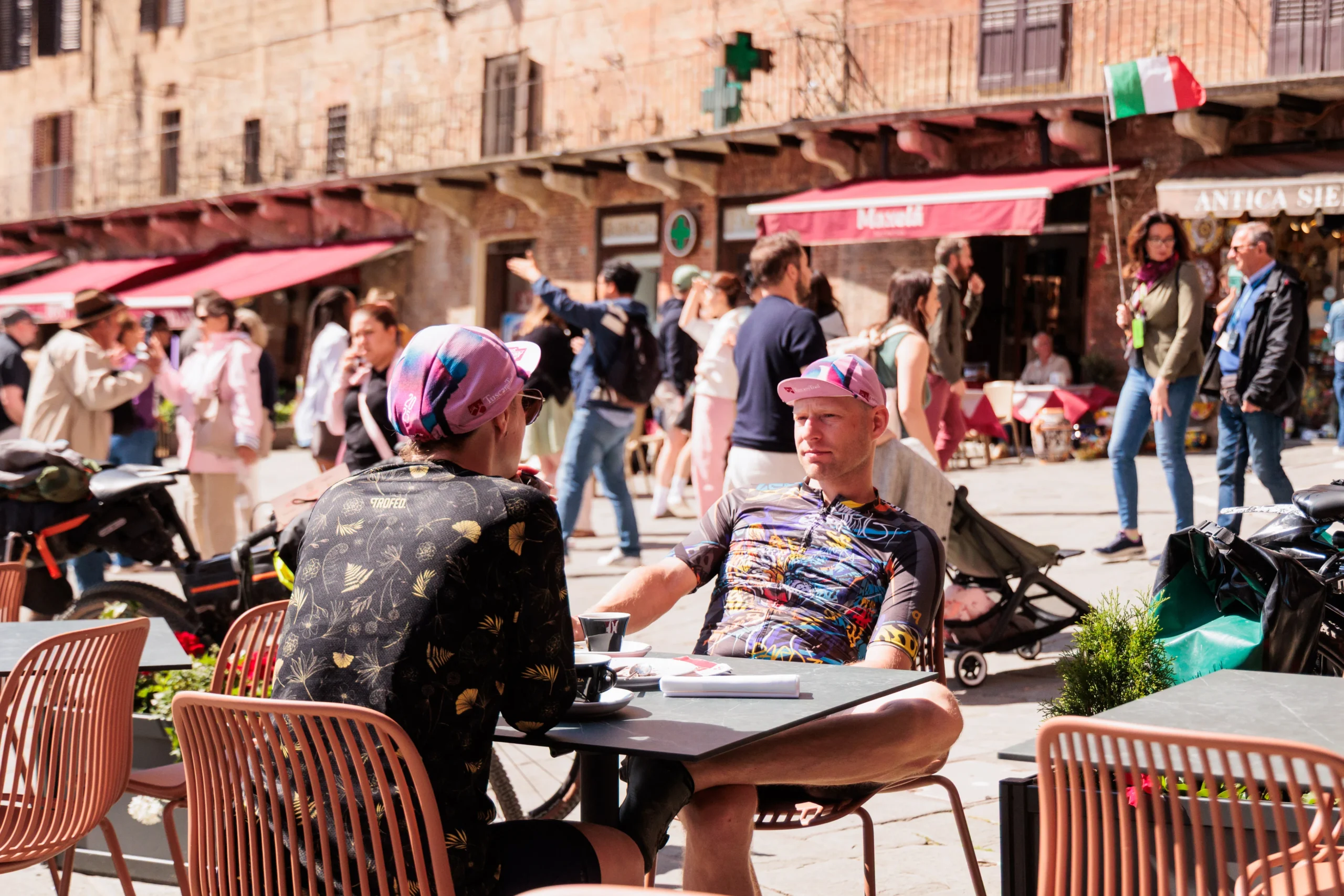
It happens at the Tuscany Trail too. Yes, you’re in Tuscany and there are bars, grocery stores and restaurants everywhere—and you’ll eat incredibly well. But there are two issues. First, there will always be stretches where you find nothing. Second, it’s not just about eating. It’s about what you eat and when you eat it, because digestion is felt on the pedals.
We’re not nutritionists, but we do have experience
Cycling nutrition could fill an entire encyclopedia. That’s not our goal—and we’re not here to play nutritionists. But we’ve ridden a lot of kilometers, and we’ve paid for a few mistakes ourselves. So we can share a few practical pointers.
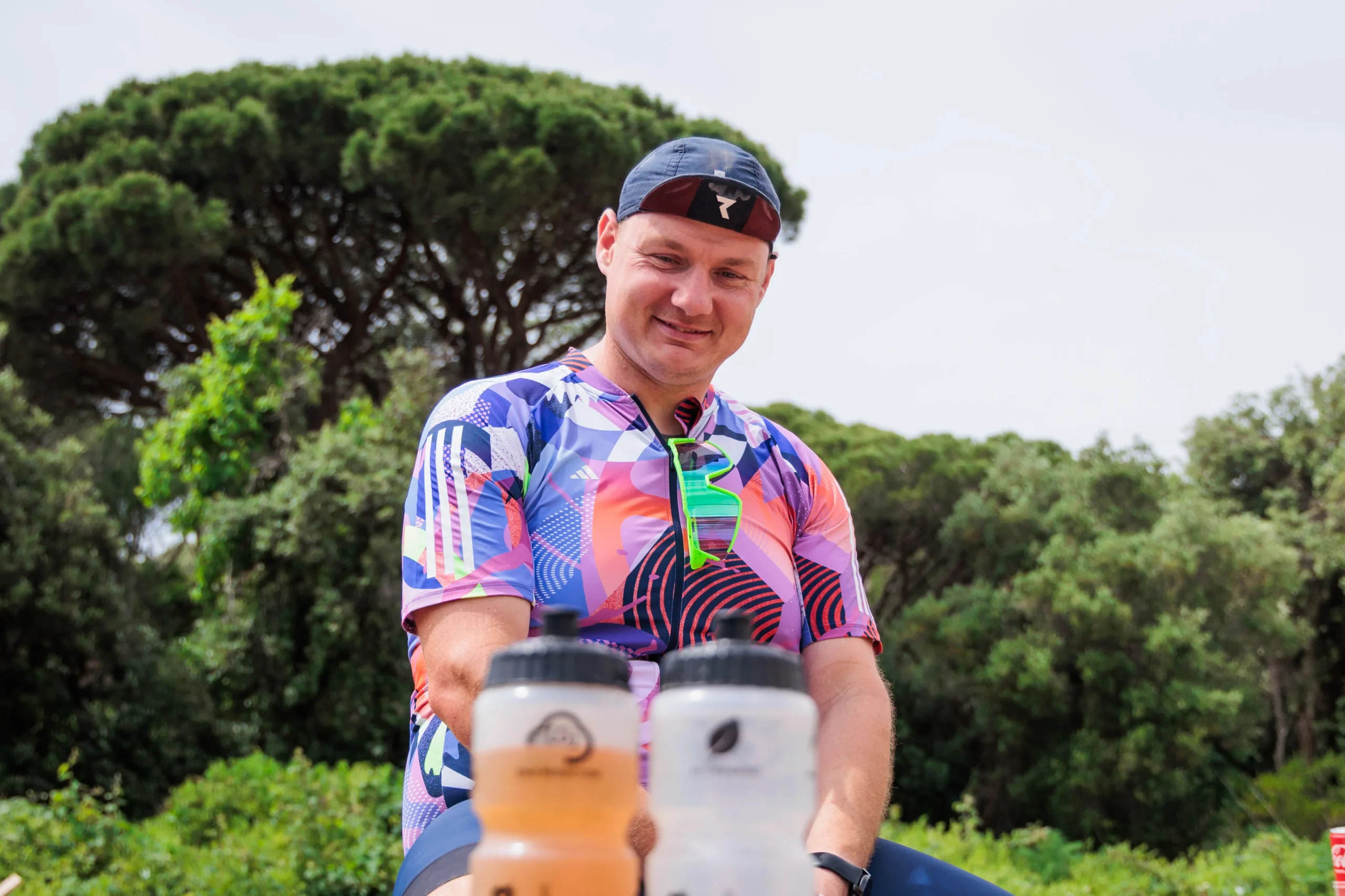
The first rule is simple: always keep food within reach. Always. Not buried at the bottom of your bags. In your pocket. Accessible. Ready.
Energy bars matter. They’re not optional. They’re small, calorie-dense, and made to fuel you while you’re pushing. No cooking, no stopping for half an hour, no hunting for a shop.
We’ve always used Enervit. Not just since they became a Tuscany Trail sponsor. The reason is simple: the quality of the ingredients is undeniable, and the products are designed specifically for cyclists.
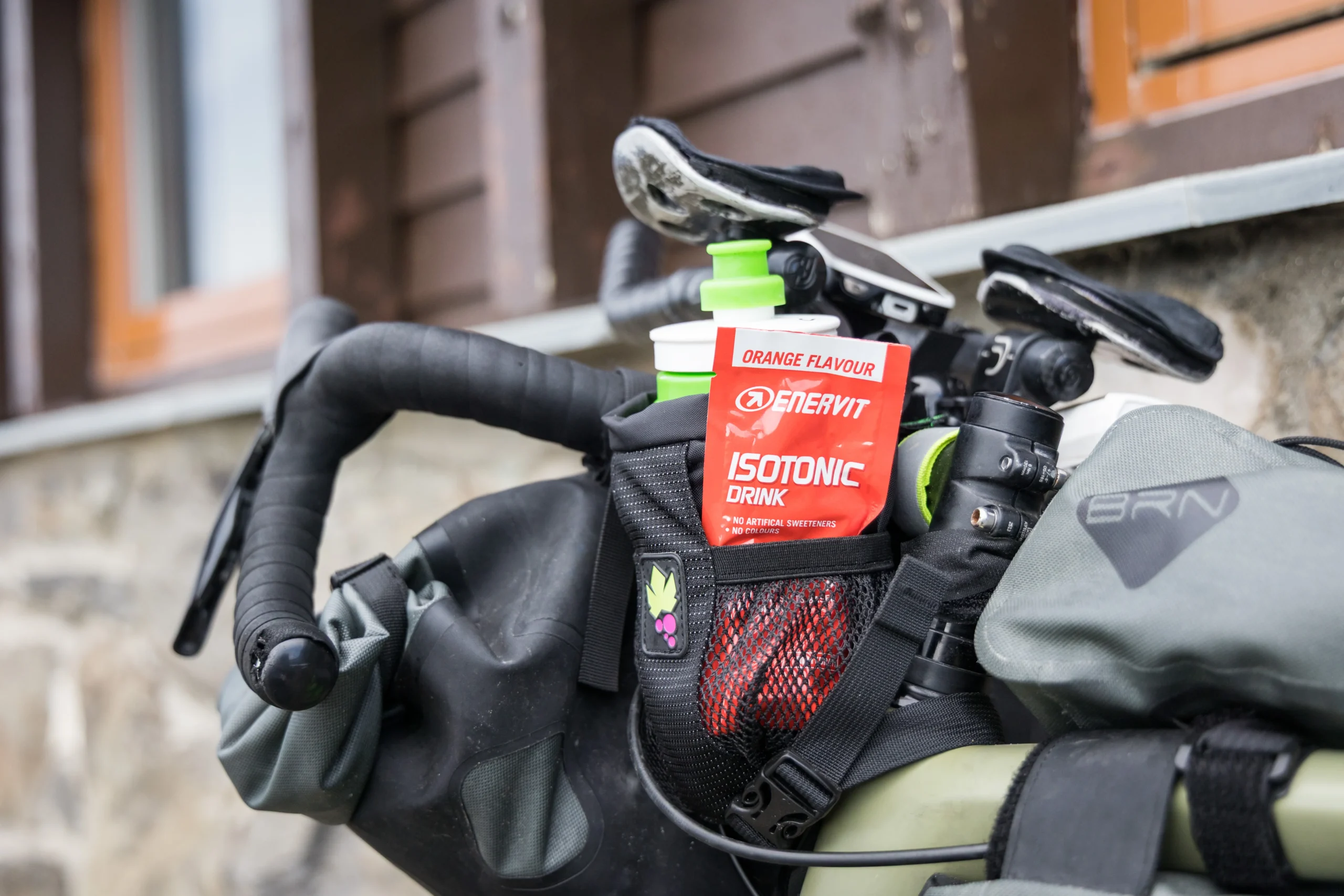
In general, regardless of brand, cycling-specific nutrition works because it meets very specific needs. It can be used before, during, and after the effort.
One thing is crucial: eat before you’re hungry. Don’t wait until you’re empty. When you feel the crash, it’s already too late. Better little and often.
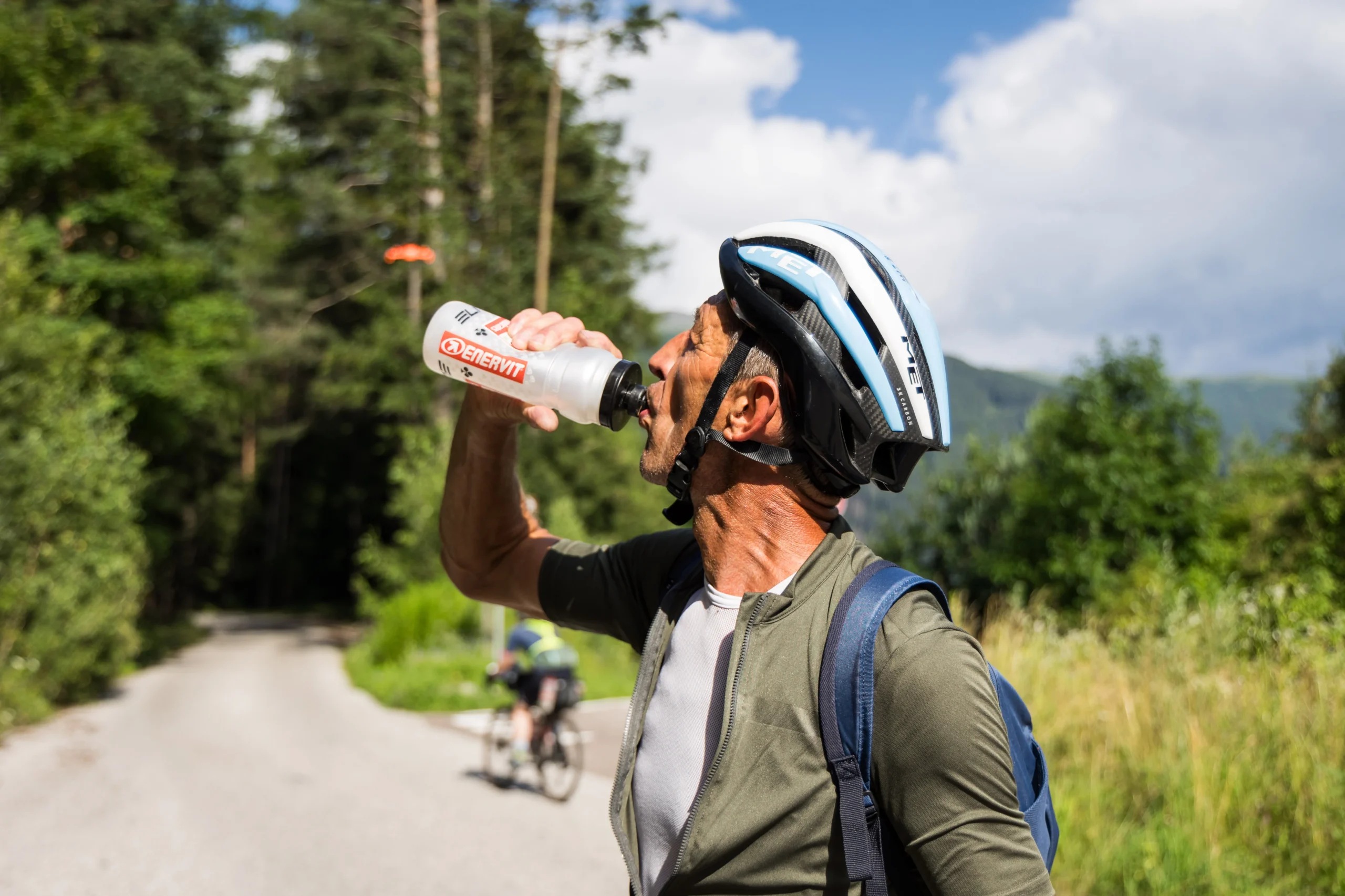
Better to have one extra bar than one too few. After consecutive days on the bike your metabolism speeds up, hunger increases, and so does consumption. Keep that in mind.
In practice: a simple “day plan”
- Breakfast before you start: always. It’s the most important meal when you have 6–7 hours in the saddle. Better to avoid too much fiber (e.g., yogurt/fruit) and choose something simple and easy to digest.
- Start eating on a timer. Don’t wait for hunger signals: about 1 hour after breakfast, start fueling regularly.
- Hydration + electrolytes: especially in the heat, alternate water and electrolytes/isotonic drinks, sipping often (even every 15–20 minutes).
- When you’re far from towns: keep a small “emergency stash” (gels/bars) separate, ready to use when you go hours without any resupply.
- Recovery at the end of the stage: once you’re done riding, something for recovery (carbs + amino acids/protein) helps you feel better the next day.
Enjoy the territory, smartly
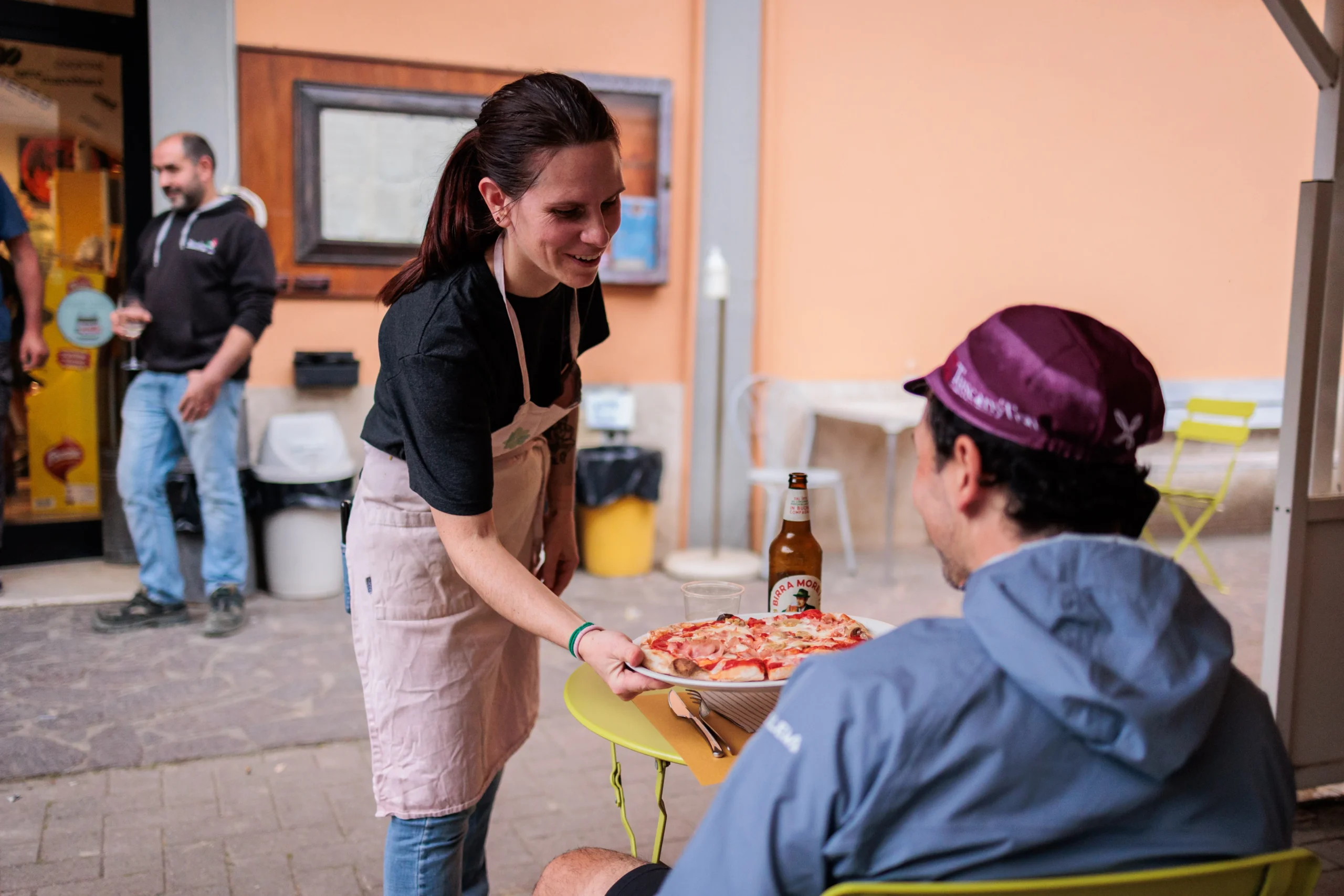
A bike trip is a 360° experience: it’s riding, it’s landscapes, and it’s also local food and wine.
And in Tuscany this is a big part of the experience. The tip is to manage it well. At lunch, don’t overdo it: a heavy meal comes back to bite in the afternoon. Digestion slows everything down and your legs feel empty.
Enjoy it in the evening, when you don’t have to ride anymore. At Bike Adventure Series events, it’s always recommended not to ride at sunset—first because you won’t enjoy the view, and second for safety. So have dinner calmly, enjoy the territory, recover your energy. But during the day, think like a cyclist.

Add comment