What is the best bike for bikepacking on dirt roads
Get comfortable, because we are stepping into a minefield often inhabited by opposing camps and strong opinions.
Let’s go straight to the point. Is it better to ride a mountain bike or a gravel bike.
Anyone who followed the evolution of mountain bikes from 2010 onwards will probably see a clear parallel. We were all looking for a bike that was light and efficient on climbs but also capable of handling any descent, even the steepest and roughest singletrack. That story is still ongoing and the perfect bike has not been found yet.
In the end, it is the same story. There has never been a mountain bike that works everywhere, and likewise, there is no travel bike that performs well in every possible context.
In recent years, the gravel bike has become the symbol of modern bicycle travel. It is used everywhere, on both off-road and pavement. But are we really sure it is always the right choice?
The bike choice depends on the route
To bring some order to the discussion, it helps to remember one simple concept. A bike is a tool designed to ride a specific route. If you cannot change the route, the bike choice must match the route's characteristics. When we talk about mixed routes where pavement alternates with dirt, things quickly become more complex because many factors come into play.
The first and most important factor is the type of surface. People often forget that the real difference lies not in road width but in road surface. You can have wide roads covered in rough stones and you can have narrow singletrack that is so smooth you could almost play marbles on it.
Then there is steepness. The closer you get to the mountains, the steeper the climbs become, and gearing needs to adapt accordingly. Do you remember the first gravel bikes with a one-to-one climbing gear? Brutal.
Another often underestimated aspect is surface continuity. It is important not only to know what kind of dirt you will ride, but also how long you will ride it and how often it alternates with pavement.
There is also the factor of load and duration. Riding that same dirt section with an unloaded bike is one thing. Riding it after hours in the saddle with bags and gear is something completely different.
So yes, the first step is always the same. Study the route carefully.
Pros and cons of traveling with a mountain bike
Pros
A mountain bike allows you to tackle almost any kind of terrain and remains controllable even when things get technical. The flat handlebar makes it easy to mount a wide handlebar bag. The frame is strong and designed to carry heavy loads while maintaining stability. Wide tires provide comfort on rough sections and sharp rocks. Gearing is usually low enough to handle steep climbs. Something that is often underestimated is how the combination of geometry, flat bar, and suspension fork makes off-road riding safer and more comfortable.
Cons
Mountain bikes are often heavy because they are built to be strong. Knobby tires are slow on pavement. Suspension forks are not designed to carry bags on the fork legs. They require maintenance and can fail. Hand positions are limited, which can cause hand fatigue over long days. Mountain bikes are not designed to be efficient on flat roads, and on pavement, they feel slow.
Pros and cons of traveling with a gravel bike
The gravel bike has become the reference point for off-road travel in recent years. Its biggest advantage is versatility. It performs very well on pavement and on easy dirt roads. It also played a major role in revitalizing the global bikepacking movement. At the same time, this huge exposure has created some distortions that are worth addressing.
Pros
A gravel bike is versatile and efficient on pavement and smooth dirt. Some models are very light, even under ten kilograms. Many are designed for travel with mounting points on the frame and fork for racks and bags. Endurance geometry is meant for long days in the saddle. Gravel bikes can be fast thanks to gearing that still takes road riding into account. Drop bars offer multiple hand positions, improving comfort and aerodynamics.
Cons
Gravel bikes cannot handle every type of dirt. On technical terrain they quickly become hard to control. They require better off road riding skills because they are less forgiving than mountain bikes. Without suspension, wrists, hands, shoulders and neck suffer from vibrations over time. Drop bars are not designed to feel strong and confident when riding rough off road sections.
There is no single way to travel
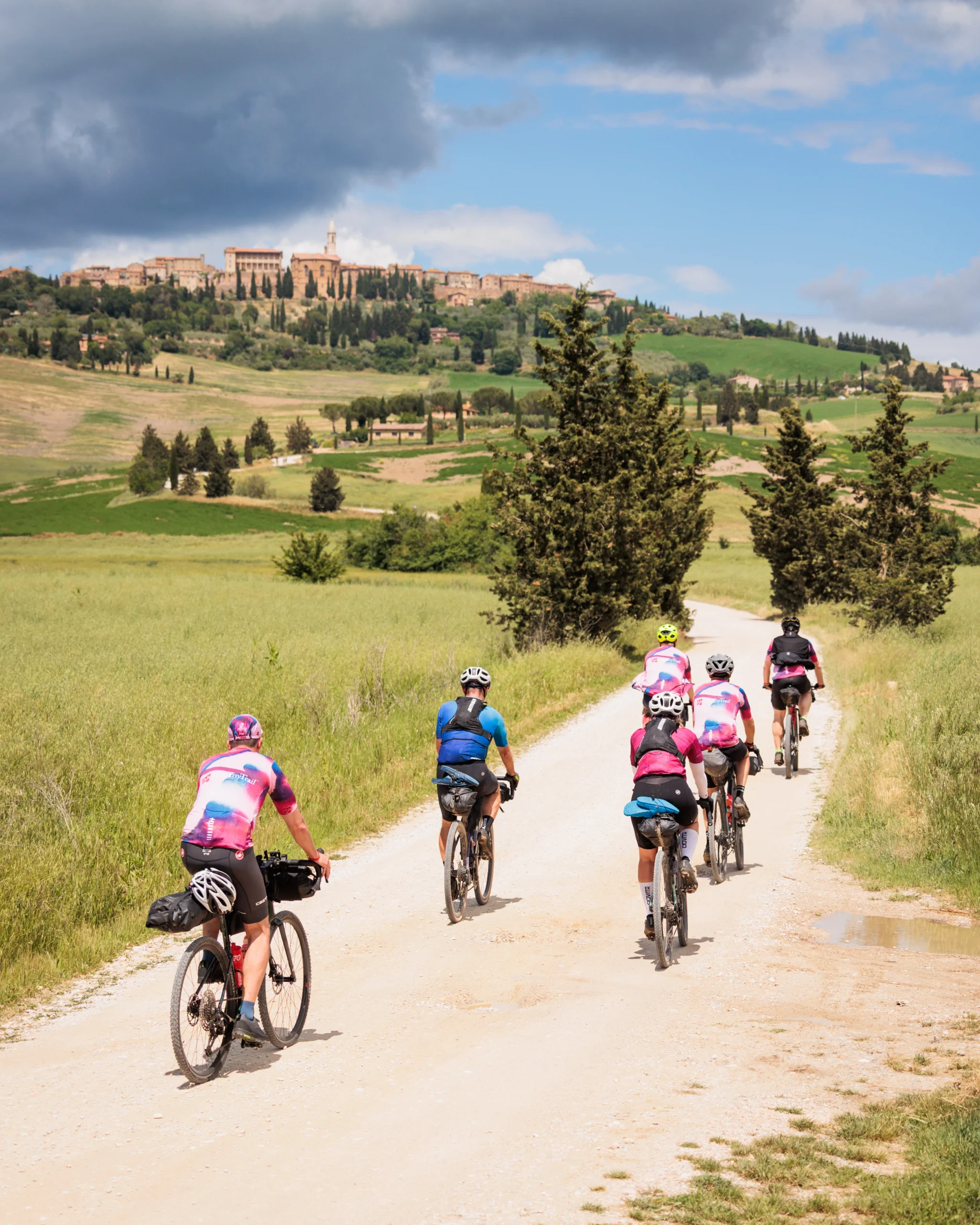
So which one is better? There is no single answer. The best bike depends on the route you want to ride and on the rider you are. Within the operating range of both gravel bikes and mountain bikes there is a shared area where either choice can work. In that space people have different priorities and different needs, and they will naturally choose the bike that fits them best.
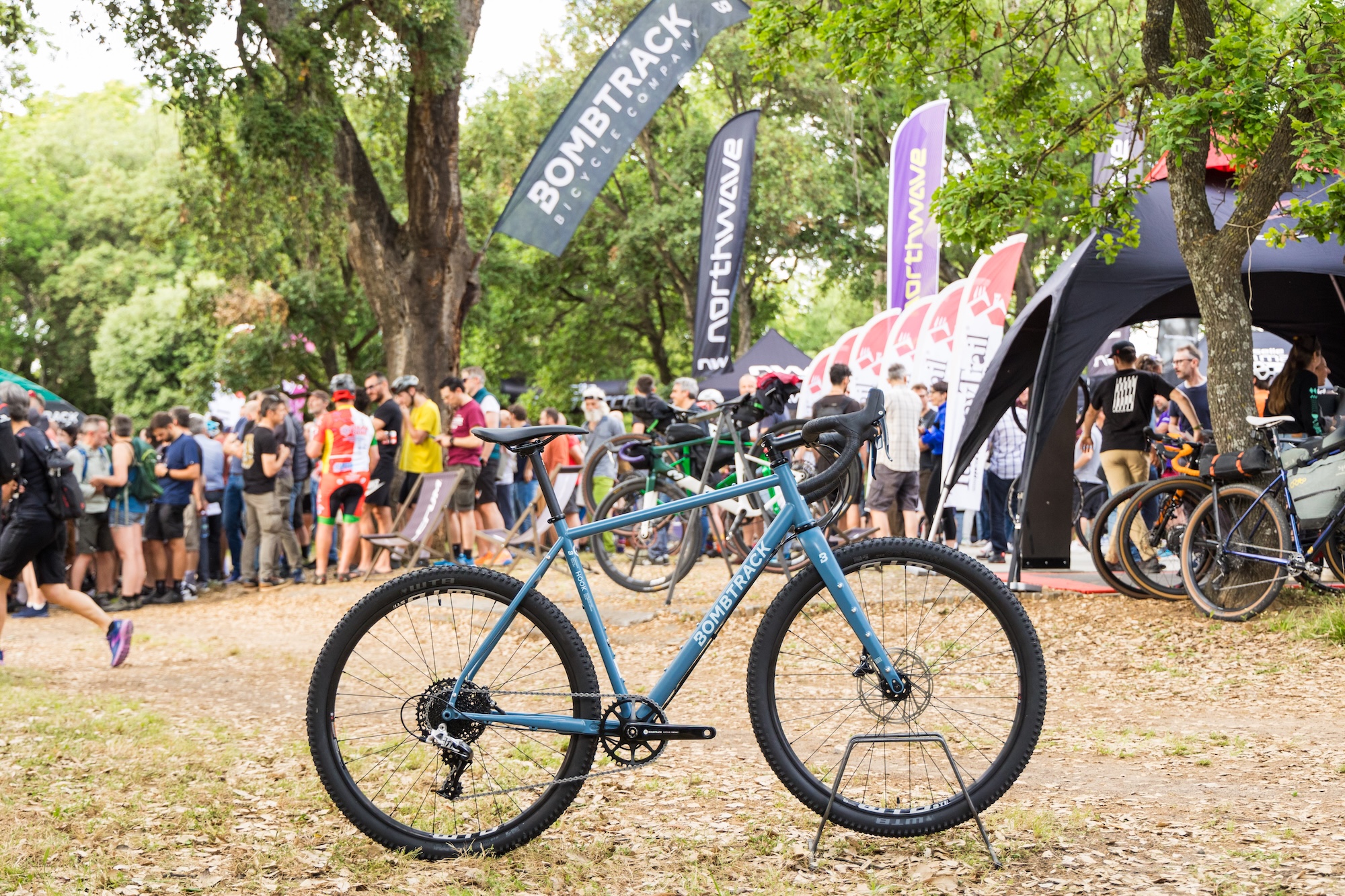
This is also why, if you look at Bombtrack, a brand that has become a reference in the world of travel bikes, you will find an extremely wide range of models in the Adventure and Touring category. Their approach is clear and, in my opinion, absolutely right. There is no single correct bike for bikepacking because there is no single way to travel.
Over the years, Bombtrack has built a real map of possibilities. Their bikes may look similar at first glance, but they are designed for very different contexts. From the more classic Arise Tour bikes focused on traditional cycle touring, to the Beyond family, which sits at the core of the Bombtrack philosophy and is designed for long journeys on mixed terrain with robust frames, stable geometry and a remarkable number of mounting points for bags and racks.
If you are interested in the Bombtrack builds and tips (they actually rode nearly every edition of Tuscany Trail!) write them to [email protected] and (and also ask for the whopping 15% discount for BAS members).
The best bike for the Tuscany Trail
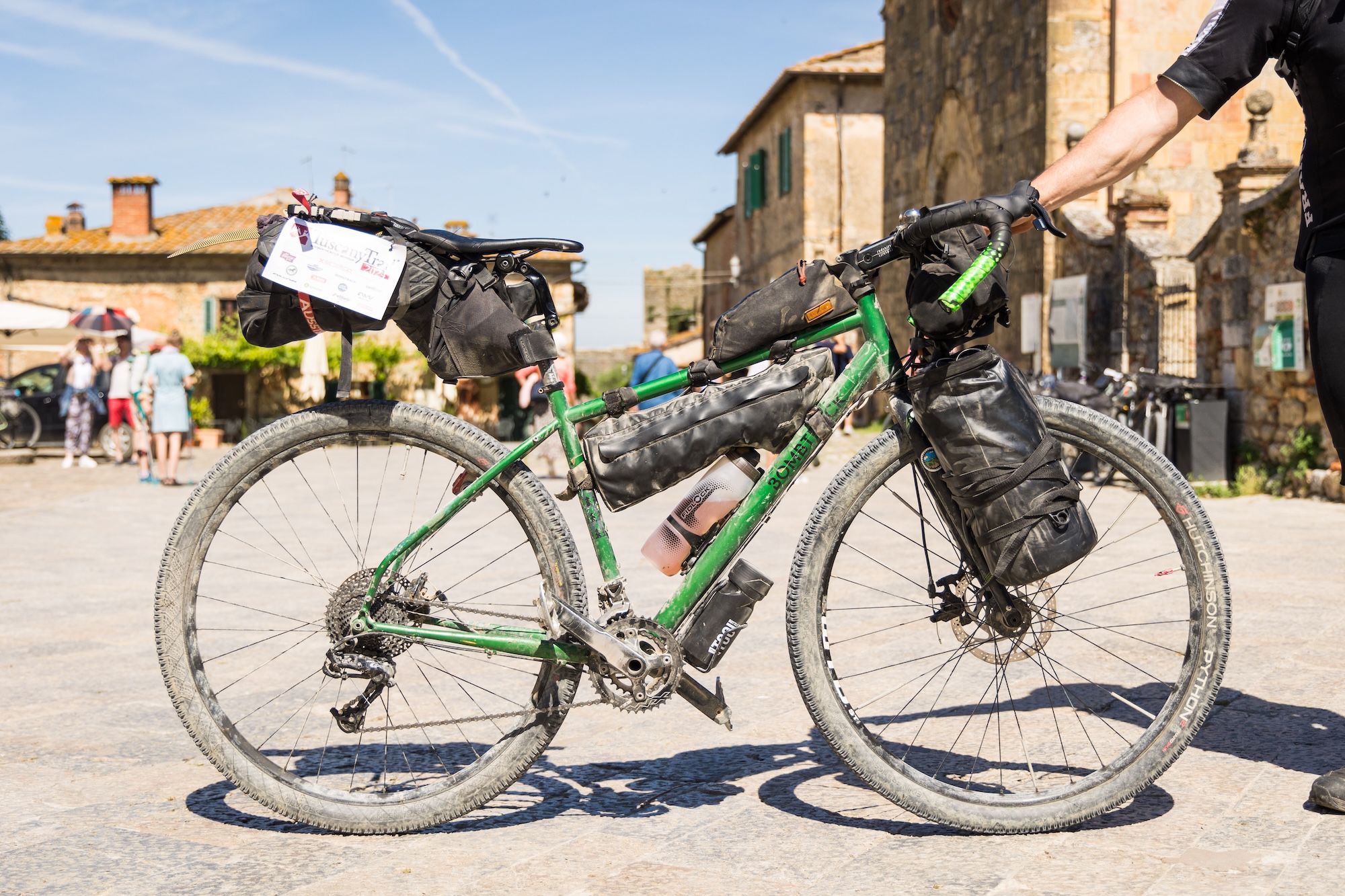
Once you understand the main differences between mountain bikes and gravel bikes for bikepacking, you can start asking which bike works best for the Tuscany Trail, because additional factors come into play.
To really understand which bike makes sense for the Tuscany Trail, you first need to understand the route itself. The bike exists to ride the route, and once again it is the route that decides the bike.
Over the years, the Tuscany Trail has evolved significantly. It started as a north-to-south crossing of Tuscany, then became a semi-loop, and eventually a full loop with start and finish in the same place. Since it became a loop, we have increasingly chosen what we call dirt roads, where you can ride with your head up. Smooth and flowing gravel roads without real technical difficulties.
This evolution has created a route that is, objectively speaking, perfect for a gravel bike. But be careful. A route that is perfect for a gravel bike does not automatically mean that a gravel bike is the right choice for you.
There are trips that leave little room for interpretation, such as riding four thousand kilometers on pavement to reach the North Cape or crossing Patagonia for three thousand kilometers. Then there are trips like the Tuscany Trail, where certain conditions allow a subjective variable to enter the decision. You can ask yourself a simple question. Which bike makes me happier when I travel.
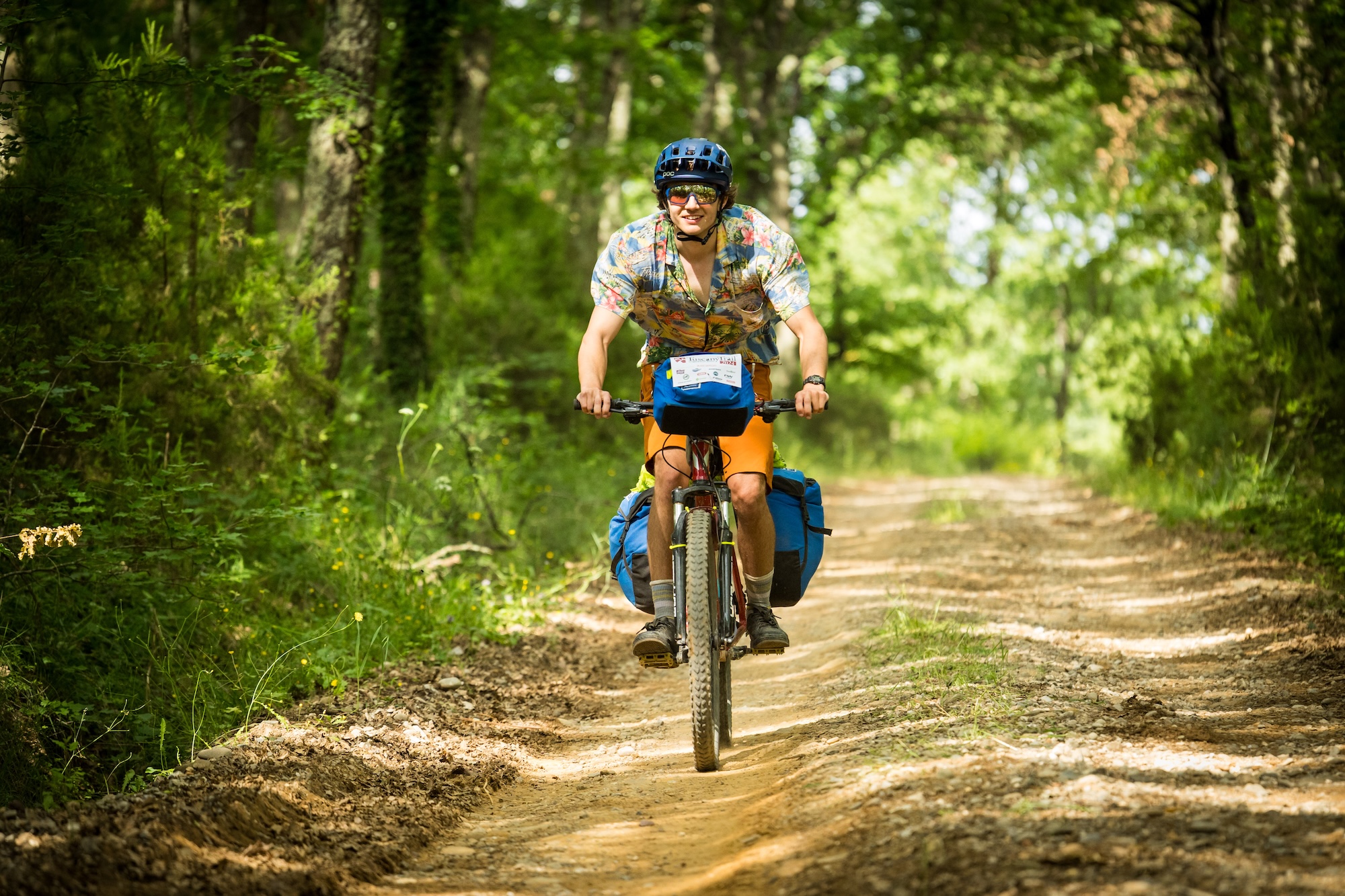
Anyone who has ridden the Tuscany Trail will have noticed that all kinds of off-road bikes are present. Carbon gravel bikes with narrow tires, full suspension mountain bikes with long travel, fat bikes, tandems, hardtails, monstercross bikes and even mountain bikes from the nineties.
Over the years we have ridden the route with every type of bike. Gravel, monstercross, touring bikes, rigid mountain bikes, fat bikes, hardtails, full suspension bikes and yes, even electric bikes. The result has always been the same. We always had fun, because in that moment it was the right bike for us.
Who is right and who is wrong. Nobody. Everyone is right as long as the choice is made consciously.
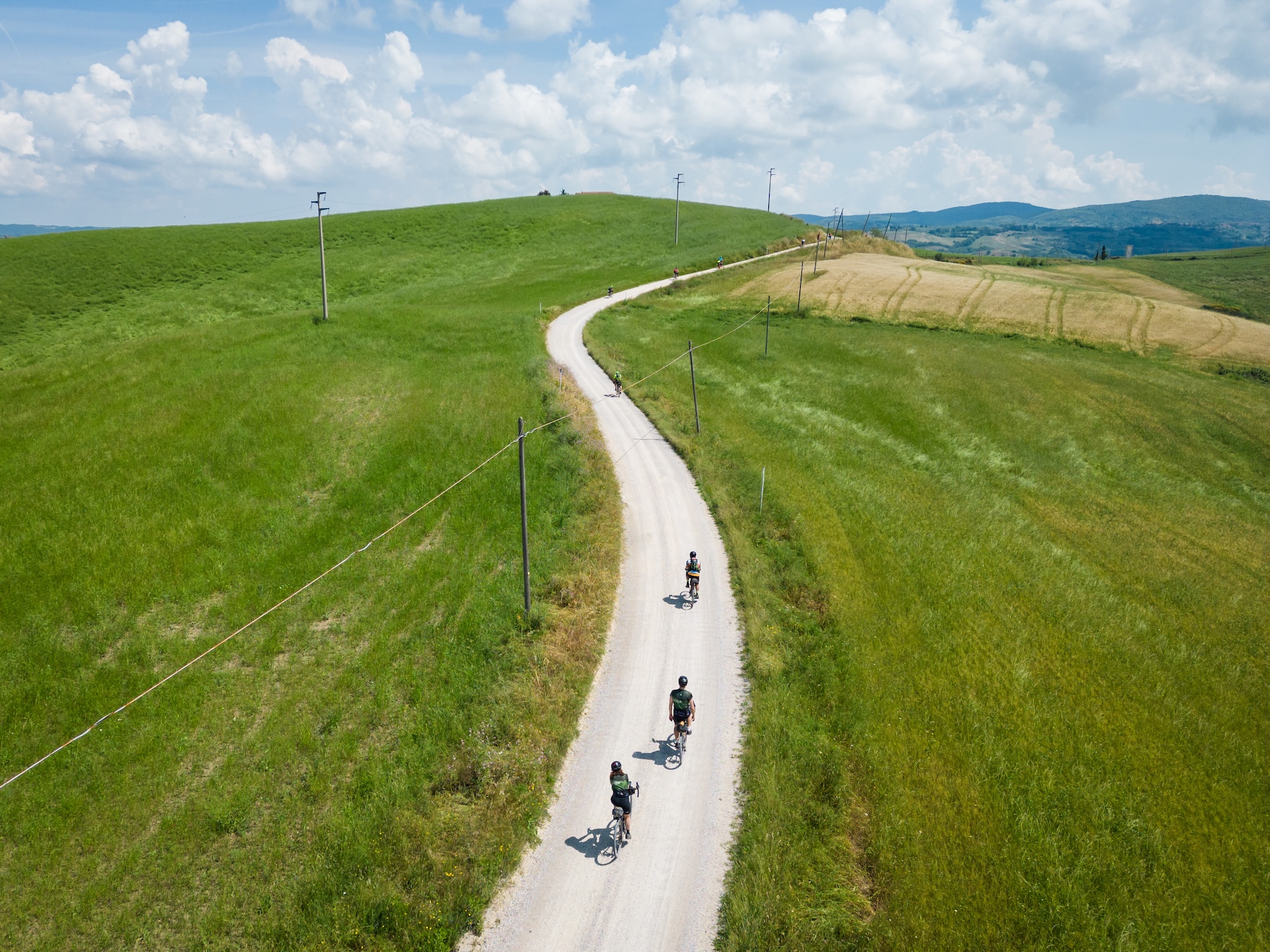
One important thing needs to be said. This freedom to choose the bike that makes you feel better exists only because the Tuscany Trail has very specific characteristics.
It is around four hundred and fifty kilometers long with about five thousand meters of elevation gain, so it is completed in a limited number of days. It is technically easy. It takes place in Tuscany, with simple logistics and generally favorable weather.
That is why here you can also choose with your gut.
In conclusion, after riding the Tuscany Trail with every kind of bike, from hardtails to fat bikes, from full suspension to gravel and monstercross, if I had to name the most sensible choice for this route, it would be a gravel bike with forty-five millimeter tires.
Practical advice for choosing a bike for off-road travel
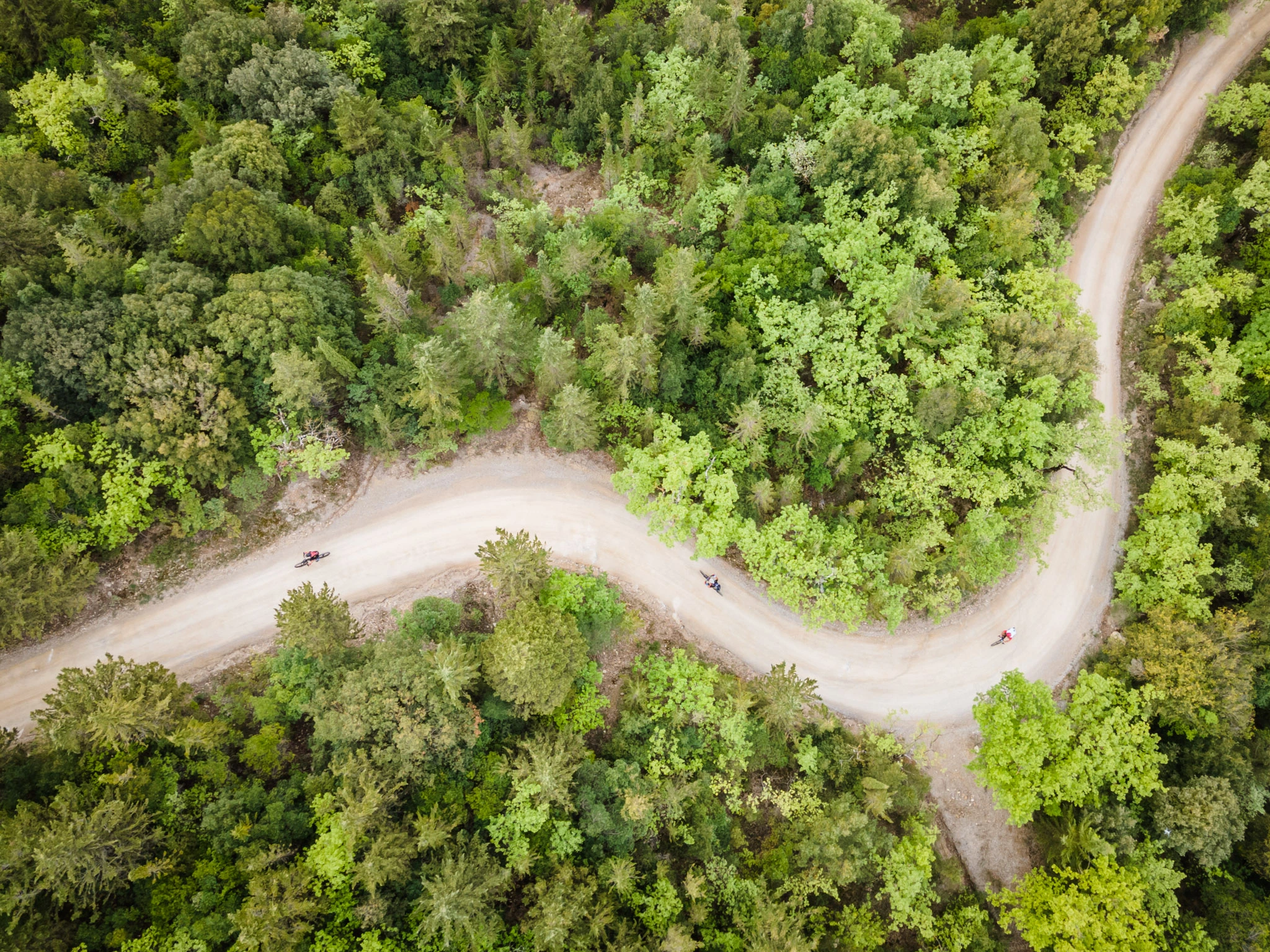
- Riding off-road requires bike handling skills.
Technique is something you learn over time. The less technical skill you have, the more you need a bike that helps you, which usually means a mountain bike or at least wide tires on a gravel bike. - If you use a suspension fork, remember to increase air pressure slightly because a handlebar bag adds extra weight. You will need easier gears for climbing because of the additional weight of bags and equipment.
- If you have a new bike, always test it on a short trip before committing to a real journey. Be careful with beautiful bikes, the so-called dream builds. Sometimes they are not the best choice for a specific route.
- Choose robustness over light weight.
- The more remote the trip, the more you need a bike that is easy to maintain. Integrated cable routing may look clean, but it is not your friend when something goes wrong on the road.
- Do not try to be a hero. Ignore Instagram photos. When the route is truly off-road, use a mountain bike.
- Play with tire pressure. Inflate more on pavement and lower pressure on dirt.
- Think carefully about braking. A loaded bike puts much more stress on the system, so reliable hydraulic disc brakes make a real difference.
gra.russo40
1 month agoGrazie ottimi consigli, non vedo l’ora di esserci

Add comment